How Water Constraints Are Reshaping Data Center Site Selection for 2027
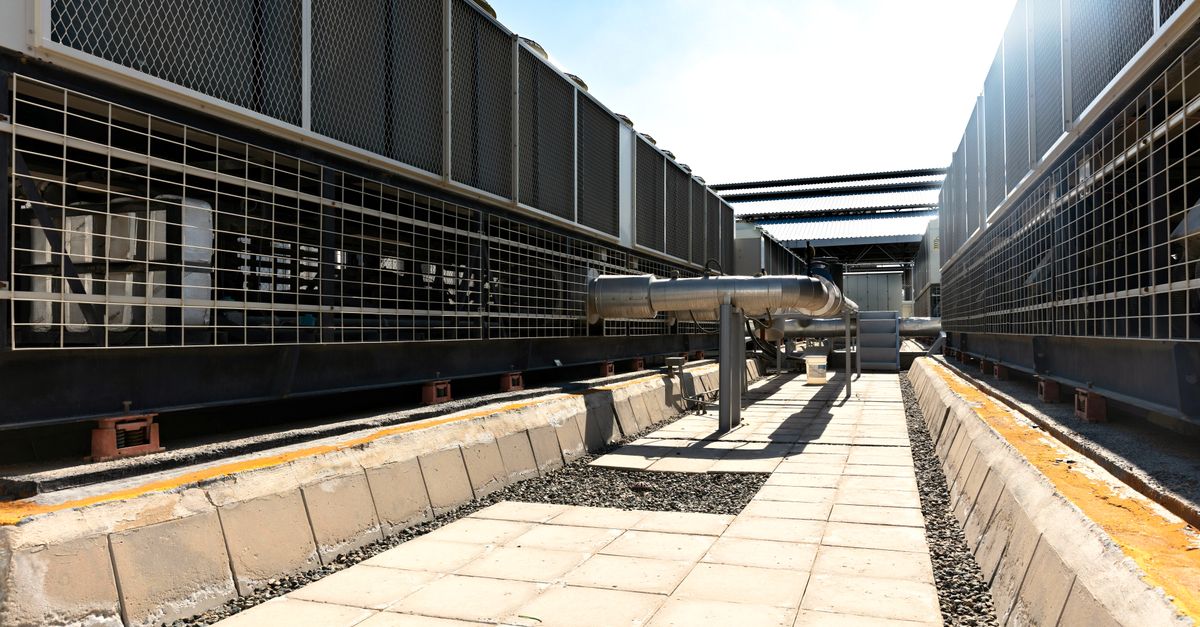
Water constraints are changing data center site selection for 2027 by turning cooling water from a late-stage engineering detail into an early test of whether a site can operate at all. A parcel with available power, fiber and land can still fail if its cooling design depends on water the local utility cannot reliably supply during peak heat or drought. Developers need to establish both the facility’s water demand and the durability of its water supply before treating a location as viable.
That does not mean every data center needs the same amount of water. Cooling architecture, computing load, climate and electricity supply change the answer. A low-water cooling system may ease pressure on a municipal utility while increasing electrical demand. The strongest site is therefore not necessarily the one with the cheapest land or the lowest projected water use. It is the one where power, cooling, water supply, wastewater capacity and approvals work together at full buildout.
At Hubexo, we approach this as a location intelligence problem as well as an engineering problem: identify development activity and stakeholders early, then test each candidate site against utility commitments and a cooling plan. Our ConstructionWire platform supports project tracking, site selection research, market analysis, decision-maker research and alerts. Those signals can help teams decide where to investigate, while the utility and engineering team determine whether a specific water strategy is feasible.
What counts as water risk in data center site selection?
Data center water risk is the possibility that a facility’s water demand, supply, quality or discharge requirements cannot be met reliably and affordably throughout its planned operation. It includes the water used at the facility, the infrastructure needed to deliver and treat it, restrictions during drought, and the water associated with generating electricity. It also includes approval risk when a proposed water source creates concerns for regulators or nearby users.
Three distinctions make the analysis more useful:
- Withdrawal versus consumption: Water withdrawn from a source is not necessarily water consumed. Evaporation removes water from immediate local availability, while some other uses return water after treatment. Ask for both figures rather than accepting a single volume labeled as water use.
- Direct versus indirect use: Direct use occurs at the data center, including cooling and related operations. Indirect use can occur in electricity generation. Reducing the site’s water meter reading does not automatically reduce the broader water footprint.
- Average versus peak demand: Annual totals help with budgeting, but maximum daily demand may determine whether the utility can serve a facility during the hottest part of the year.
These distinctions matter because two proposals with similar annual water estimates can impose very different demands on a water system. One may require a high peak flow on hot days; another may need a steadier supply year-round. Utility capacity, storage, discharge treatment and drought rules should be assessed against the actual operating pattern.
Why water is moving earlier in the 2027 decision
Data centers must remove heat continuously. Some cooling systems reject heat through evaporation, which can reduce the amount of electricity needed for heat rejection but consume water. Other approaches rely less on evaporation, shifting more of the burden to equipment, power infrastructure or heat-rejection space. Increasing computing density makes it especially important to define the workload before assuming that a familiar cooling design will fit a new site.
Water constraints become a development problem when a proposed facility needs a new connection, expanded treatment capacity, a reliable alternative source or approval to discharge wastewater. Each requirement can affect cost and schedule. A developer who learns about those needs only after acquiring land may have fewer choices: redesign the cooling system, fund infrastructure, reduce the proposed capacity or reconsider the location.
Water also changes how a community evaluates a proposal. Residents and other water users may reasonably ask whether a project will compete with existing demand during drought and who will pay for upgrades. A credible answer needs a specific source, expected demand at full buildout and an operating plan for restricted conditions. A general promise to use efficient cooling is not a substitute.
Power remains a critical early filter. Our related analysis explains why power availability is becoming the first filter for new data center sites. Water should be tested alongside it: changing the cooling design to save water may alter the electrical load that made the site attractive in the first place.

Five ways water constraints change the site shortlist
1. Utility assurances need to match the proposed buildout
A site team should ask the water provider what it can serve today, what depends on planned upgrades, and whether its position changes at full campus capacity. An early-stage facility may be supportable while later phases are not. Request written information on available service, maximum flow, connection timing, required infrastructure and responsibility for costs. Ask how drought restrictions apply to large commercial users.
Make the distinction between a preliminary conversation and a service commitment. Neither a nearby water main nor a verbal indication of available capacity establishes that the provider can support the proposed cooling system at peak load. If an upgrade is necessary, its funding and delivery schedule belong in the site comparison.
2. Seasonal stress can outweigh annual water availability
Water demand and supply conditions can both change during hot weather. An evaporative system may need more makeup water when heat rejection is most demanding, while the local utility may be managing increased demand from other customers. Evaluate peak-day and peak-month conditions, not just a yearly estimate. Ask whether restrictions would affect the facility’s ability to operate its planned cooling system.
A practical screening model should test ordinary operation, the expected peak heat condition and a restricted-supply condition. The point is not to predict every future event. It is to find out whether the facility can continue operating under the conditions most likely to expose a weak water plan.
3. Cooling choices can redraw the power and land requirements
Switching from an evaporative approach to a lower-water alternative may make a water-constrained parcel workable, but the redesign can change electrical demand, equipment footprint and operating costs. That can affect transformer sizing, electrical service negotiations and the space available for other site infrastructure. Evaluate the cooling option and the parcel as one combined decision, not as separate purchases.
4. Reclaimed water is an option only if the full connection works
Reclaimed water can reduce reliance on potable supply when an appropriate source, permitted use and delivery route exist. But proximity to a treatment plant is not the same as usable service. Confirm available flow, seasonal reliability, water quality, treatment needs, pipeline capacity, contract terms and backup arrangements. A proposed source that depends on an unfunded pipeline extension should be treated differently from one with a workable delivery plan.
5. Nearby development changes the water outlook
Data center teams should look beyond the parcel. Other planned industrial, residential and infrastructure projects may affect utility expansion plans, local priorities or the timing of service commitments. Project intelligence helps reveal who else is developing in a market and which decision-makers are involved. It does not replace the provider’s capacity assessment, but it gives the site team better questions to ask before making a commitment.
Compare cooling approaches without confusing the water claims
Cooling descriptions can sound more definitive than the design warrants. A closed liquid loop, for example, does not by itself tell you how heat leaves the facility. The loop might transfer heat to a dry system, an evaporative system or another heat-rejection arrangement. Likewise, direct-to-chip liquid cooling describes how heat is collected from equipment, not necessarily whether the full facility consumes water.
| Approach | Water question | Other site question |
|---|---|---|
| Evaporative heat rejection | How much makeup water is needed under normal and peak heat conditions, and how is blowdown handled? | Can the utility and wastewater system support that demand and discharge? |
| Dry or air-cooled heat rejection | How much on-site water remains necessary for the complete facility? | What electrical demand and equipment space are needed during hot conditions? |
| Hybrid heat rejection | When does the system switch to water use, and what is the peak demand? | Will restrictions apply during the periods when water-assisted operation is most valuable? |
| Liquid cooling at the equipment | What heat-rejection system serves the liquid loop? | Is the proposed IT equipment compatible with the design and operating plan? |
For every option, compare the same operating assumptions: initial load, full buildout, seasonal conditions, redundancy, electricity use, direct water consumption, wastewater needs and infrastructure costs. Otherwise, a low-water proposal may appear better simply because it was modeled under easier conditions than the alternative.
Water usage effectiveness, or WUE, can help teams compare water consumed in relation to IT energy use. It should not be used alone to approve a site. A single annual figure may hide a peak-day supply problem, and it does not explain where the water comes from, whether it is potable, or what happens during a drought restriction.

A step-by-step water due diligence framework
Step 1: Define what the facility will operate
Start with the proposed IT load, equipment density, operating schedule, cooling requirements and expansion phases. Record the initial capacity separately from ultimate buildout. If the workload could change, specify how the design would accommodate it. A water estimate is only useful when the associated computing and heat loads are clear.
Step 2: Model demand by season and scenario
Ask the engineering team for projected direct water withdrawal, consumption and discharge under normal conditions, peak heat and restricted supply. Show daily, seasonal and annual estimates. Identify assumptions about operating temperature, cooling mode and future phases. Consider indirect water impacts associated with electricity separately so that they are not confused with the facility’s utility connection requirement.
Step 3: Test the source and delivery path
Determine whether the plan depends on potable water, reclaimed water, groundwater or another source, then confirm the applicable rights and service terms with the responsible authority. Trace the delivery path to the site: connection, pipe capacity, pressure, treatment, storage if needed and required upgrades. If a future improvement must be completed first, record who controls that work and how it affects the project schedule.
Step 4: Review discharge and approvals
Cooling choices can create wastewater and treatment requirements. Ask whether the receiving system can accept the proposed volume and quality, what pretreatment may be required, and which permits apply. Review local land-use requirements and environmental approvals as part of the same exercise. Supply may be physically available while a discharge or permitting issue still prevents the proposed operating plan.
Step 5: Compare sites using consistent evidence
Keep one record for each candidate location. Include the proposed cooling design, modeled water demand, utility response, infrastructure dependencies, estimated power implications, approval status and outstanding questions. Separate confirmed information from assumptions. A cheaper parcel should not outrank a more workable one simply because its missing utility information has not yet been investigated.
Project data can help organize the broader market investigation. Hubexo’s ConstructionWire tracks projects from proposal to completion and provides market analysis, contacts, alerts and API access. That helps a team examine development activity and identify stakeholders while engineers and utilities establish site-specific service conditions. For a related early-stage workflow, see how to spot data center builds, expansions and power upgrades through permit activity.
Step 6: Recheck before each major commitment
Water assumptions can change as the design matures or the project expands. Reconfirm the demand model when equipment or cooling architecture changes, and revisit the utility’s position before a major land, design or construction commitment. Keep the water provider, engineering team and permitting team working from the same version of the project scope.
Best practices for a defensible site decision
- Screen water and power together. A lower-water design may need more electricity. Ask whether the site can support the combined design rather than treating a water solution as independent of grid capacity.
- Use full-buildout demand. A first phase can mask the infrastructure needed for later phases. Show both in every utility conversation.
- Ask for source-specific answers. A statement that water is available is less useful than the source, service conditions, peak capacity and restrictions attached to that availability.
- Keep consumption, withdrawal and discharge separate. Each affects a different part of the decision, from local supply to treatment and community impact.
- Test the hottest operating condition. A design that performs well on an annual average may create an unacceptable peak requirement.
- Explain trade-offs plainly. If a project reduces direct water use through a different cooling approach, explain its power and infrastructure implications as well.
- Track neighboring development. New projects can change the context for utility planning and public discussion. Early market intelligence is more valuable than discovering those pressures after a site is selected.
- Assign owners to unresolved questions. Every assumption that could affect site viability should have a responsible party and a point at which it must be resolved.
These practices also make community engagement more productive. A clear explanation of water source, peak demand, cooling design and contingency measures gives local stakeholders something concrete to evaluate. It is better to address a difficult supply question early than to leave it unanswered until a public hearing.
Frequently asked questions
Is water now more important than power in data center site selection?
Not as a universal ranking. Power availability may eliminate a site immediately, while water can eliminate another site with excellent electrical access. The practical approach is to screen both early and revisit them together whenever the cooling design changes.
Do all data centers use large amounts of water?
No. Direct water use varies with the facility’s cooling and heat-rejection design, workload, climate and operating conditions. Compare the complete facility design, including peak demand, rather than assuming that all data centers have the same water profile.
Does liquid cooling eliminate water consumption?
No. Liquid cooling moves heat away from equipment, but that heat still has to be rejected elsewhere. Whether the facility consumes substantial water depends on the complete heat-rejection system and other water uses on-site.
What is the first water question to ask about a candidate parcel?
Ask whether a realistic cooling design at full buildout can be served during peak heat and restricted-supply conditions. That question forces the team to define demand and ask the utility about more than an average annual allocation.
Can reclaimed water solve a site’s water problem?
It can be a useful source when delivery capacity, quality, treatment, permitted use and backup supply are workable. A nearby source alone is not enough. The connection and operating terms must fit the project’s actual peak demand.
How can project intelligence help with water due diligence?
Project intelligence helps identify development activity, stakeholders and potential competition for infrastructure attention in a market. It informs where and whom to investigate. The water provider, relevant authorities and engineering team must establish the specific source, capacity and approvals for a parcel.
The decision for 2027
Water constraints are not a reason to treat every potential data center location as unsuitable. They are a reason to stop treating water as a detail to resolve after a parcel has won on power, fiber or price. Define the workload, compare complete cooling systems, test peak demand against a credible supply path, and make wastewater and approval requirements visible before final site ranking.
For teams evaluating development markets, Hubexo’s ConstructionWire provides project and stakeholder intelligence to support that early investigation. Pairing those insights with utility and engineering due diligence produces a more defensible shortlist, and a clearer basis for choosing where to build.